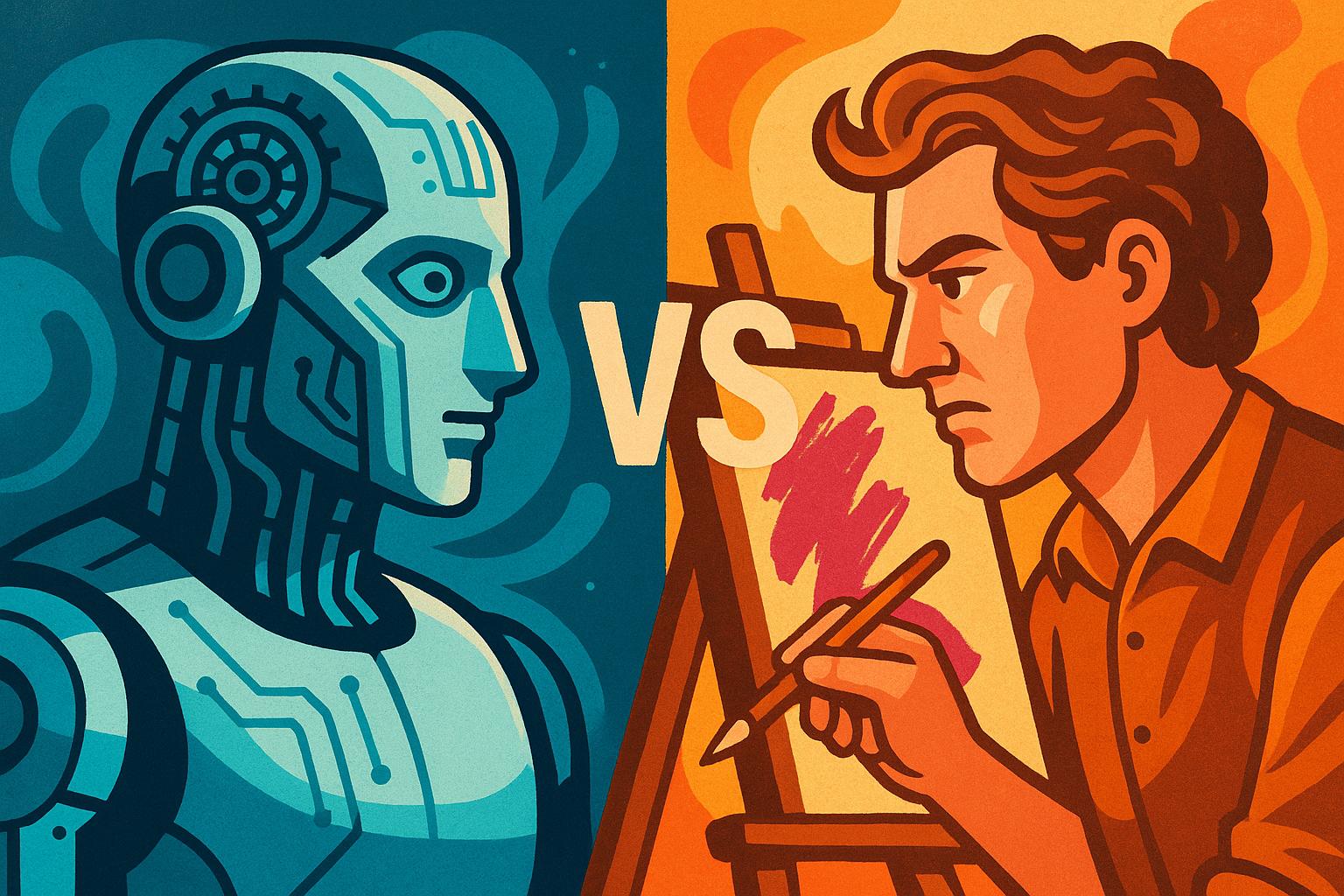
Artificial intelligence (AI) has changed the creative world faster than anyone expected. In just a few years, AI-powered tools like Midjourney, DALL·E, Adobe Firefly, and Stable Diffusion have made it possible for almost anyone to generate stunning artwork with a simple text prompt. What once took hours—or even days—can now be created in seconds.
This rapid growth has sparked one of the biggest debates in the creative industry: Can AI replace human creativity, or is it simply another tool for artists?
The answer isn’t as simple as choosing one over the other.
What Is AI Art?
AI art is artwork created with the help of artificial intelligence. Instead of painting with a brush or drawing with a stylus, users describe what they want using written prompts. The AI analyzes patterns learned from massive collections of images and generates new artwork based on those instructions.
Today’s AI image generators can create digital paintings, concept art, fantasy landscapes, character designs, illustrations, logos, and marketing graphics in just moments. For businesses and creators, this means faster workflows and endless creative possibilities.
The Human Touch
While AI is incredibly fast, it doesn’t experience emotions, memories, or life events. Human artists do.
Every brushstroke, color choice, and composition often reflects personal experiences. A digital painting inspired by grief, joy, childhood memories, or cultural traditions carries a story that extends beyond what appears on the canvas.
Think of it like cooking. AI can follow thousands of recipes and suggest the perfect ingredients, but it has never tasted a family recipe passed down through generations. Human creativity includes emotion, intuition, and lived experiences that technology cannot truly replicate.
The Strengths of AI
Artificial intelligence is changing the way artists work, and that’s not necessarily a bad thing.
Many professional designers now use AI to brainstorm ideas, create rough concepts, remove backgrounds, generate textures, or overcome creative blocks. Instead of replacing artists, AI often speeds up repetitive tasks, allowing creators to spend more time refining their vision.
For small businesses, AI also lowers the barrier to entry by making design tools more accessible. Entrepreneurs who couldn’t previously afford custom graphics can now produce marketing materials and prototypes more quickly.
Where Human Artists Still Lead
Despite AI’s impressive capabilities, human artists continue to offer something technology cannot duplicate: originality rooted in personal expression.
Clients often hire artists not simply for the final image, but for collaboration, communication, problem-solving, and storytelling. A professional illustrator can understand a client’s vision, ask questions, make creative decisions, and adapt throughout the project.
Human artists also build relationships with their audience. Fans follow creators because they connect with the artist behind the work—not just the artwork itself.
Copyright and Ethical Questions
One of the biggest challenges surrounding AI-generated art involves copyright and intellectual property.
Many AI systems are trained using enormous collections of existing images, raising questions about whether artists gave permission for their work to be included. As governments, courts, and technology companies continue to address these concerns, copyright laws surrounding AI-generated content are still evolving.
Transparency also matters. Many people believe creators should clearly identify when artificial intelligence played a significant role in producing artwork. Honest communication helps build trust with clients and audiences.
The Future of Digital Art
The future of digital art will likely involve collaboration rather than competition.
Photography didn’t eliminate painting. Digital cameras didn’t replace photographers. Graphic design software didn’t eliminate designers. Instead, each new technology became another creative tool.
Artificial intelligence is following a similar path.
Artists who learn how to combine AI with traditional illustration, digital painting, graphic design, and creative storytelling may discover entirely new ways to express ideas while improving efficiency.
Final Thoughts
The debate between AI art and human art isn’t really about choosing a winner. It’s about understanding the strengths of each.
Artificial intelligence can generate impressive images, accelerate creative workflows, and make visual content more accessible than ever before. Human artists bring imagination, emotion, experience, and purpose—qualities that cannot simply be generated by an algorithm.
The most exciting future may not belong to AI or human artists alone. Instead, it belongs to creators who understand how to use technology without losing the originality, passion, and authenticity that make art meaningful.
As AI continues to evolve, one thing remains clear: creativity has always adapted to new tools. The brush, the camera, the graphics tablet, and now artificial intelligence all serve the same purpose—to help people transform ideas into something others can see, feel, and remember.
Leave a Reply